If you just want the definition before clicking any settings, here it is: Amazon FBA Export is a way for eligible products stored in US FBA to be purchased by international customers shopping on Amazon.com (subject to eligibility and destination limits). It’s not the same as shipping your inventory to another country’s Amazon warehouse.
Key points
Once you know the definition, the simplest way to understand FBA Export is to picture the order flow: an overseas customer shops on Amazon.com, checkout reflects cross-border delivery, and Amazon fulfills the order if the item is export-eligible.
How the flow typically works
What to pay attention to as a seller
Now that you understand the order flow, the next question is which “international” path you’re actually choosing. FBA Export is about exporting customer orders from your home marketplace; other programs are about selling in new marketplaces or moving inventory across borders.
Quick comparison table
Decision criteria (use these to choose fast)
With the programs separated, the practical next step is control: you manage FBA Export in Seller Central by finding Export Settings, confirming your enrollment status, and setting exclusions when you want a “middle option” between on and off.
What to look for (UI-light landmarks)
If you only change one thing, make it this: toggle export intentionally and verify the status after saving.
Post-save verification checklist
If you don’t want to fully opt out, exclusions are the most practical lever: you can often keep FBA Export on while restricting specific products or destinations that create outsized risk.
Use exclusions when
How to think about exclusions
After you’ve confirmed your settings, the next constraint is eligibility: FBA Export only works for products Amazon considers export-eligible, and that can vary by destination and change over time.
What eligibility usually depends on
Instead of relying on one brittle click path, use this checklist to find eligibility signals in Seller Central:
Practical move: Treat eligibility as a catalog hygiene task—review it before you decide “leave on vs limit vs opt out.”
When a product shows as ineligible, don’t assume it’s a mistake. Ineligibility usually falls into a few repeatable buckets, and your next step depends on which bucket you’re in.
Common ineligibility buckets
Safe next actions
Once you know eligibility, cost becomes the deciding factor: FBA Export is typically framed as having no extra enrollment fee for sellers, while the buyer’s checkout may include international shipping and import-related charges—so “cost” depends on whose perspective you mean.
Who pays what (conceptual)
Why “no extra cost” can be misleading
Practical takeaway
With costs understood, you can choose an approach that matches your risk profile: the “best” choice isn’t universal—your decision should follow your product risk, brand obligations, and how much control you need over customer experience.
Choose one path
Risk → action checklist
If you’re not sure yet, start here: exclude the SKUs and scenarios most likely to create disproportionate downside.
Once you’ve chosen a path, restrictions explain why some items should be treated as higher-risk even if they look “eligible.” In cross-border contexts, small product attributes can trigger big shipping and compliance differences.
Red-flag checklist (use this to decide when to verify or exclude)
What to do if you hit red flags
After restrictions, it comes down to day-to-day reality: cross-border delivery often increases customer expectation gaps—especially around delivery times, duties/taxes perceptions, and return convenience—so plan for more friction than domestic FBA.
Typical friction points
Mitigations that don’t require a full opt-out
If you keep export on, monitoring turns “random international orders” into a plan. Watch where demand is repeating and where friction is accumulating, then adjust exclusions or consider local inventory.
What to look for
How to use the data
When exports show repeat demand, the next step is whether to expand “for real.” If a country consistently buys your product, local selling and local inventory can improve conversion, delivery speed, and returns experience—at the cost of more operational setup.
Signals you’re ready to expand locally
A practical next-step path
Once you choose local stocking, a checklist reduces “first shipment” mistakes:
If you’re moving from “export demand test” to “stocking abroad,” a prep + logistics partner can be most useful at the handoff points: multi-supplier consolidation, inspection, labeling/kitting, and carton planning before the first overseas inbound shipment. FBABEE is an independent logistics and FBA prep partner (not affiliated with Amazon).
Before you act on any international plan, keep guardrails in mind: cross-border selling can introduce tax, invoicing, and regulatory obligations that vary by jurisdiction, so treat this section as a reminder—not professional advice.
Safe guardrails
Amazon FBA Export is a program that can allow eligible items stored in US fulfillment centers to be purchased by some international customers shopping on Amazon.com. It exports customer orders, not your inventory, and eligibility can vary by product and destination.
Look for Export Settings under your Fulfillment by Amazon settings in Seller Central. You can typically edit your export status there, then save and recheck the page to confirm the change applied. Labels and menu paths can vary, so use “Export Settings” as your landmark.
Check for export eligibility indicators or an exportable/eligibility report in Seller Central. Start by identifying which SKUs are eligible, then review any ineligible items and decide whether to exclude risky SKUs even if they’re allowed.
Often, yes—exclusions are commonly used to limit risk without fully opting out. Use product exclusions for high-return or high-support SKUs, and destination restrictions when brand obligations or customer experience risk is higher in specific regions.
From the buyer’s perspective, checkout may include international shipping and import-related charges depending on destination and order details. From the seller’s perspective, FBA Export is generally framed as not requiring separate enrollment fees, but your true “cost” can show up in conversion, returns, and support load.
The main risks are customer experience variability (delivery expectations and returns friction), margin sensitivity to landed cost, and brand/support constraints (warranty or territory agreements). If you’re unsure, limit exposure with exclusions and treat export as a controlled demand test.
If you want the easiest move: confirm your Export Settings, identify which SKUs are eligible, and start with exclusions for your highest-risk products. If export demand repeats in specific countries, consider expanding locally with a deliberate inbound logistics and prep plan instead of relying on cross-border fulfillment forever.
Need help planning the “China factory → prep → FBA inbound” side of expansion (especially with multiple suppliers)? FBABEE can support consolidation, inspection, labeling/kitting, and carton planning as an independent logistics and prep partner (not affiliated with Amazon).
Back to top
Your email address will not be published. Required fields are marked *
Comment *
Name *
Email *
Save my name, email, and website in this browser for the next time I comment.
Δ
This site uses Akismet to reduce spam. Learn how your comment data is processed.
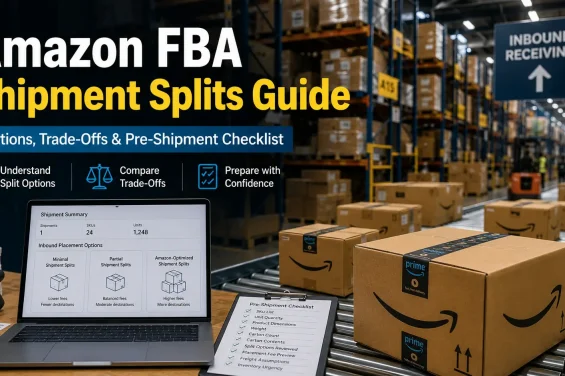
What Are FBA Shipment Splits? Amazon FBA shipment splits are inbound placement options that may send your inventory to one ...
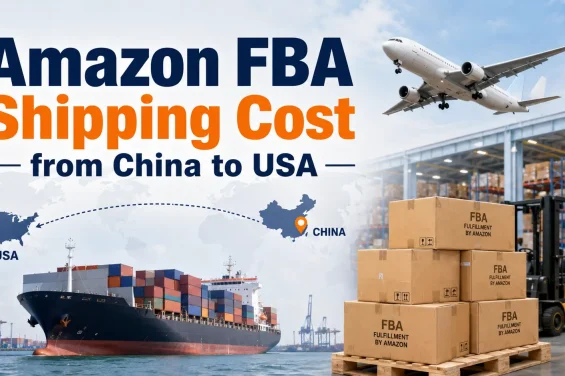
Shipping from China to Amazon FBA in the USA rarely has one fixed price. Two sellers can ship similar products ...
Table of Contents Heavy box label decision + placement Terms that get mixed up: Team Lift vs Heavy Package vs ...