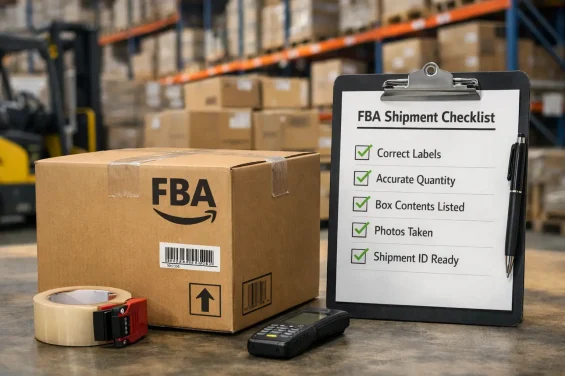


Fast Answer: The “Best” Amazon FBA Product Is the Best-Fit Product
There isn’t one universal “best product” for Amazon FBA. The best product is the one that fits your goals and is practical to source, prep, and ship without creating expensive surprises.
Key points
- Market fit: steady demand, manageable competition, and a clear way to differentiate.
- Operational fit: reasonable size/weight, lower damage/return risk, and prep/packaging you can execute consistently.
- Risk fit: avoid products likely to trigger restrictions, dangerous goods classification, or complex handling unless you have a plan.
- Execution fit: your product choice should match how you’ll buy, inspect, prep, and move inventory into FBA.
Caveats
- “Best” changes with your resources (budget, time, team) and your selling model (private label vs resale).
- A product can look great in research but fail in practice if it’s fragile, hard to prep, or frequently flagged as restricted.
If you treat “best” as “best-fit,” choosing products becomes a repeatable process instead of a guessing game.
What “Best” Really Means on Amazon FBA (A Best-Fit Framework)
“Best” is really shorthand for: best-fit for your situation—your goals, constraints, and ability to execute.
Key points
- Think in two lenses:
- Market lens: demand, competition, and differentiation.
- Operations lens: product traits that affect prep, packaging, restrictions, shipping, and returns.
- Start by defining your “fit” constraints before you brainstorm product ideas:
- Your budget and appetite for inventory risk
- Your timeline (how fast you need to launch and restock)
- Your ability to handle complexity (bundles, inserts, fragile items, regulated categories)
- Whether you’re sourcing from one supplier or multiple suppliers
Practical best-fit inputs (quick list)
- What business model are you running (private label, wholesale, resale)?
- Do you want simpler operations first (lower rework risk), or are you willing to manage complexity for differentiation?
- Are you sourcing domestically or internationally (which can add more failure points)?
Caveats
- If differentiation depends on bundling or custom packaging, operational complexity rises quickly.
- If your product is easy to ship and prep, it may also be easier for competitors to copy—so differentiation matters.
With that framework in mind, you can score product ideas consistently instead of chasing whatever looks “hot” this month.
The FBA Product Scorecard: What Makes a Product a Good Fit

A good FBA product is the one that scores well on market fit and operational fit—not just one or the other.
Key points
- Market fit answers: “Will people buy this, and can I compete?”
- Operational fit answers: “Can I source, prep, package, and ship this reliably without constant rework or returns?”
- Your goal is a shortlist of products you can execute consistently—especially important for first-time launches.
Scorecard table (traits → why they matter → what to check)
| Criterion | Why it matters for FBA | What to check quickly |
|---|---|---|
| Demand stability | Reduces the risk of slow-moving inventory | Search results consistency, repeat purchase patterns, common use-cases |
| Competition intensity | Determines how hard it is to win clicks and conversions | Brand dominance, listing quality, review depth, price compression |
| Differentiation path | Helps you avoid “me-too” listings | Common complaints in reviews, missing features, bundle opportunities |
| Size/weight | Affects shipping and handling complexity | Unit and packaged dimensions, carton efficiency, breakage risk |
| Fragility/leak risk | Drives damage, returns, and packaging requirements | Materials, moving parts, liquid/gel components, protection needs |
| Return risk drivers | High returns erase progress fast | Fit/compatibility issues, subjective quality, “one-time use” disappointment |
| Restriction/dangerous goods risk | Can limit FBA eligibility and require extra steps | Ingredients, batteries, chemicals, regulated claims—verify policy |
| Prep complexity | More prep steps increase error and rework risk | Labeling needs, poly-bagging, sets/bundles, inserts, carton planning |
| Supplier consistency | Inconsistent batches cause rework and returns | Samples, spec sheet, QC plan, packaging standards |
| Landed-cost sensitivity | A product may break if shipping costs rise | Bulkiness, low price tolerance, packaging inefficiency |
Quick yes/no shortlist checklist
- Can you explain the product’s main value in one sentence (clear buyer intent)?
- Can you identify at least one real differentiation angle (not just “better quality”)?
- Is it reasonably easy to package and protect (lower damage/return risk)?
- Are restriction or dangerous goods risks unlikely—or at least manageable with a clear plan?
- Can you document specs and packaging standards so suppliers can repeat them?
Caveats
- “Small and light” helps operations, but it doesn’t guarantee market viability—some niches are saturated.
- Some products are viable only if you’re prepared for extra compliance or handling steps.
Once a product clears the scorecard, you can move from “idea” to “validated candidate.”
Where to Find Product Ideas (That Actually Reflect Demand)
Product ideas are hypotheses. The goal is to generate many, then use your scorecard and validation steps to narrow them quickly.
Key points
- Strong idea sources come from real customer problems and observable buying behavior.
- Avoid building your whole plan around a single “trending products” list—use it as a starting signal only.
Idea sources (signals)
- Customer pain points: common problems people complain about (and how they currently solve them).
- Review mining: find repeated complaints and “wish it had…” patterns in top listings.
- Accessory ecosystems: add-ons that improve a popular product without directly copying it.
- Replacement parts and consumables: predictable repurchase can be a stabilizer (when compliant).
- Multi-pack or bundle angles: combine complementary items to create a clearer value proposition.
- Variation gaps: sizes, colors, or use-cases that are underserved (but still in demand).
- Seasonal-to-evergreen adjacency: products that peak seasonally but have year-round use-cases.
Shortlist rules (use the scorecard)
- Keep only ideas that can realistically be differentiated.
- Prefer ideas with manageable packaging and lower damage/return risk.
- Flag anything with potential restriction/dangerous goods complexity for extra verification.
Caveat
- Trends can fade; seasonality and competition must be checked before committing inventory.
With a shortlist in hand, the next move is to validate demand and competition before you place a meaningful order.
How to Validate Demand and Competition Before You Buy Inventory
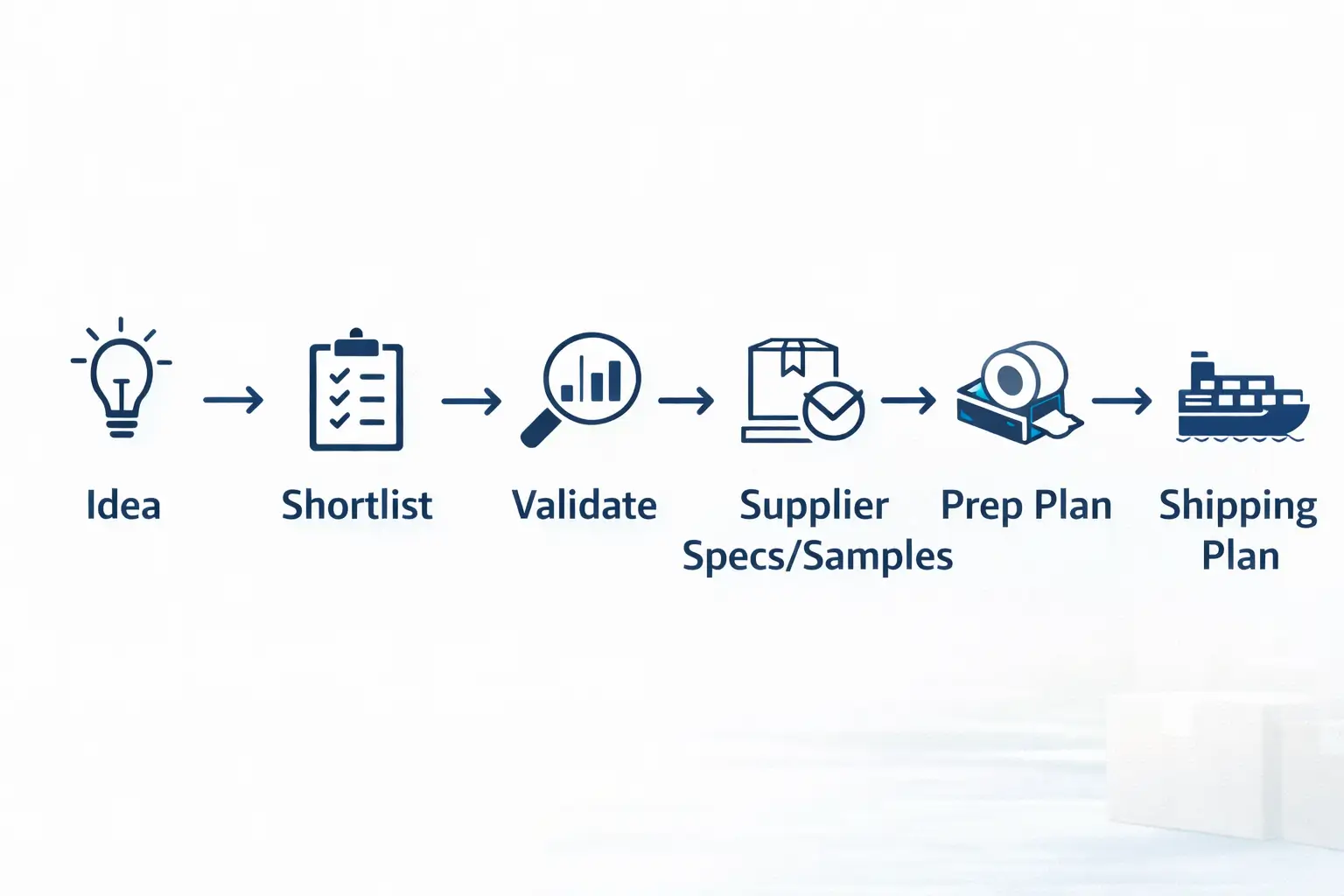
Validate before you buy inventory: confirm that demand exists, competition is survivable, and differentiation is feasible for your resources.
Key points
- Validation is strongest when you use multiple signals, not a single metric.
- You can do a solid first pass without paid tools by studying search results and listings carefully.
Validation steps (repeatable workflow)
- Define the search intent: what exact problem does the buyer want solved?
- Scan page one: what kinds of products rank, and what patterns repeat?
- Map the price band: identify realistic pricing and whether the niche is price-compressed.
- Assess listing quality: strong brands + excellent listings usually mean tougher competition.
- Read reviews for gaps: look for repeated complaints you can solve with a real change.
- Check differentiation feasibility: can you add a feature, improve usability, or bundle without creating messy prep?
- Stress-test operations: will your differentiation increase prep complexity or shipping risk too much?
- Make a “stop/continue” call: continue only if you can win on value and execute consistently.
Signals table (what to look for)
| Signal type | Positive signs | Warning signs |
|---|---|---|
| Demand cues | Many listings with steady review velocity; broad use-cases | Demand looks “spiky” or narrowly seasonal without a plan |
| Competition cues | Mixed brands; room for improvement in listings or features | Dominant brands; uniformly strong listings; heavy price compression |
| Differentiation cues | Clear unmet needs in reviews; common complaints you can fix | No meaningful gaps; buyers treat products as interchangeable |
| Operations cues | Straightforward packaging; low fragility; consistent specs possible | High breakage/leak risk; complex prep; likely restrictions |
Qualitative stop/continue rule
- Stop if your only plan is to match what already exists with minor cosmetic changes.
- Continue if you can clearly explain how your version solves a real complaint and you can execute prep/shipping reliably.
Caveats
- Low review counts don’t always mean low competition—brands may be strong through ads or off-Amazon demand.
- Any validation is imperfect; treat early conclusions as directional until you test with samples and small runs.
After validation, it’s smart to run a risk screen—especially for restrictions and “hidden complexity” traits.
Beginner-Friendly Product Directions (Simplicity-First)
Beginner-friendly usually means simpler operations and lower return risk, not guaranteed sales.
Key points
- Favor products that are easier to package, label, and ship consistently.
- Look for products where quality is easy to verify with samples and specs.
- Avoid products that frequently trigger restrictions or complex handling until you have a stronger process.
Traits that tend to be simpler (direction-level)
- Durable, non-fragile materials (less breakage risk)
- No liquids, gels, or messy components (simpler handling)
- Fewer moving parts (lower defect risk)
- Clear usage and buyer expectations (lower “not as expected” returns)
- Packaging that protects the unit without elaborate prep steps
Small and light: when it helps (and when it hurts)
- Pros
- Often simpler to pack and handle
- Lower damage risk when the product is durable
- Easier to bundle or multi-pack in some cases
- Cons
- Can attract heavy competition (many sellers pursue “easy-to-ship” products)
- Differentiation may be harder if products are highly commoditized
- Tiny quality differences can drive negative reviews if expectations are high
Caveats
- “Beginner-friendly” doesn’t mean “easy money”—you still need a real differentiation plan and validation.
- If you choose a more complex product, be intentional about packaging specs, inspection, and prep planning.
If you’re unsure about complexity, the simplest safeguard is knowing what to avoid and why.
What to Avoid: Hidden Complexity, Restrictions, and High-Risk Traits

As a rule, avoid products with high operational or compliance complexity until you can manage the process reliably. “Hidden complexity” is a common reason products fail in execution even when demand is real.
Key points
- Many “bad” product choices aren’t bad because of demand—they’re bad because of rework, returns, damage, or policy issues.
- Risk traits don’t always mean “never,” but they do mean “plan early and verify.”
Risk-trait table (what to avoid or treat carefully)
| Risk trait | Why it’s risky | Mitigation / notes |
|---|---|---|
| Likely restricted category or regulated claims | Can require approval, documentation, or get listings blocked | Verify eligibility and required approvals before sourcing inventory |
| Dangerous goods / hazmat classification risk | May require extra information, special handling, or limit FBA eligibility | Verify classification early; be conservative with items that include chemicals or batteries |
| Liquids, gels, adhesives | Leak risk increases returns and packaging complexity | Use robust packaging specs; test packaging in transit scenarios |
| Batteries (especially lithium) | Higher compliance and shipping complexity | Confirm requirements and documentation; verify how it’s classified and handled |
| Fragile materials (glass/ceramic) | High damage rate without protection; expensive rework | Design packaging to survive drops/stacking; validate with sample shipment tests |
| Sharp edges / safety-sensitive use | Higher safety concerns and customer complaint risk | Improve design protection; ensure warnings and packaging are appropriate |
| High-variance sizing/fit expectations | Returns spike when “fit” is subjective | Provide clear sizing guidance; avoid early if you can’t control variability |
| Multi-part sets with missing-piece risk | Increases prep errors and customer dissatisfaction | Tight QC, counting procedures, and secure set packaging |
Official references to verify (US)
- Restricted products overview (Seller Central Help): https://sellercentral.amazon.com/help/hub/reference/external/G200164330?locale=en-US
- FBA Dangerous Goods Program overview (Seller Central Help): https://sellercentral.amazon.com/help/hub/reference/external/GZLZBQ7W6QZRKWWK?locale=en-US
- Amazon blog explainer on dangerous goods context: https://sell.amazon.com/blog/amazon-hazmat-dangerous-goods
Caveats
- Policies and classifications vary by marketplace and can change; verify the current guidance for your specific product.
- Some risks are manageable with better packaging, clearer specs, and tighter process—but the cost and complexity must still make sense.
Once your product clears the risk screen, model choice and execution planning become the difference between smooth inbound and constant troubleshooting.
Your Selling Model Changes What’s “Best”: Private Label vs Wholesale vs Arbitrage
Your selling model changes what you control—so it changes what “best-fit” looks like.
Key points
- Private label gives the most control over product changes and packaging, but adds supplier and spec responsibility.
- Wholesale and resale models can reduce product development effort, but often reduce control over differentiation and packaging.
Model comparison table
| Model | What you control | Typical selection advantage | Operational implications |
|---|---|---|---|
| Private label | Product specs, packaging, branding, bundles | Stronger differentiation potential | More responsibility for specs, QC, packaging, prep planning |
| Wholesale | Brand selection, pricing strategy | Faster entry if you have access | Less packaging control; must manage supply and listing constraints |
| Arbitrage/resale | Sourcing opportunities and pricing | Fast testing in some cases | Lower control; inventory consistency can be unpredictable |
Caveats
- Feasibility depends on supply access and the responsibilities you take on (especially around compliance).
- More control often means more process—be honest about what you can execute.
Whatever your model, the practical risk reducer is the same: lock specs early and plan prep and packaging before inventory moves.
Before You Order: Supplier, Samples, and Packaging Specs Checklist
Before you commit to inventory, verify with samples and documented specs—not assumptions.
Key points
- A clear spec sheet and packaging standard reduces rework and inbound problems later.
- Multi-supplier sourcing adds variability; consistency standards matter more than you think.
Supplier readiness checklist
- Product specification
- Confirm materials, dimensions, and tolerances in writing.
- Validate a “golden sample” that future batches must match.
- Packaging specification
- Define unit packaging (how it’s protected, sealed, labeled).
- Define carton standards (carton size, packing method, internal protection).
- Quality expectations
- Agree on defect definitions and what triggers rework or replacement.
- Set an inspection plan (when, what to check, and how issues are documented).
- Set/bundle readiness (if relevant)
- Define exactly what is included and how you prevent missing-piece errors.
- Confirm counting and packing procedures.
- Documentation mindset
- Keep a single source of truth for specs and packaging so every supplier follows the same rules.
Multi-supplier consistency (quick safeguard)
- Standardize carton rules and label placement so consolidated shipments don’t become chaotic.
- Ensure all suppliers ship to the same spec, or you’ll spend time and money fixing mismatches later.
If you’re sourcing from multiple suppliers and want a single, consistent inbound standard (receiving checks, consolidation, and prep coordination), consider working with an experienced China-side consolidation and prep partner. You can start with a simple scope: sample checks + packaging spec alignment + consolidation into one FBA-ready shipment. (Example starting point: https://fbabee.com/)
Caveat
- Supplier capability varies; keep verification routine even after the first successful batch.
Once you’re confident in the product and packaging specs, plan the FBA prep steps before anything ships.
Before You Ship: Prep, Packaging, and Bundling Decisions
Plan prep and packaging early to avoid last-minute relabeling, repacking, and inbound delays.
Key points
- Prep decisions should be made before production is finalized, not after cartons are already packed.
- Bundles can help differentiation, but they increase prep complexity and missing-piece risk.
Prep and packaging checklist
- Labeling readiness
- Ensure each unit can be labeled/scanned cleanly after preparation.
- Avoid label placement where barcodes fold over edges or seams.
- Unit protection
- Choose packaging that survives stacking and transit handling.
- Add protection for fragile components (if you must sell them).
- Bundle/kitting decisions
- Decide whether bundling truly improves value or just adds complexity.
- If bundling, define how pieces are secured so sets remain intact.
- Carton planning mindset
- Use carton standards that support consistent receiving and handling.
- Keep carton contents consistent to reduce mistakes downstream.
Official reference for packaging expectations
- Product packaging requirements (Seller Central Help): https://sellercentral.amazon.com/help/hub/reference/external/G200141500?locale=en-US
Caveat
- Prep and packaging requirements vary by product type and can change; verify the current guidance for your listing category and attributes.
If you already have a validated product but you’re worried about prep complexity (labels, bundles, inserts, carton planning), a practical approach is to document your prep standard first—then align suppliers and packing before you ship. This reduces rework and makes replenishment easier to repeat.
With prep planning in place, you can choose a shipping approach that matches product traits and inventory timing goals.
How Product Choice Affects Shipping Strategy and Inventory Timing
Product traits influence which shipping options are practical and how much timing risk you carry.
Key points
- Bulkier, fragile, or higher-complexity products usually require stronger packaging and more careful planning.
- Faster shipping can reduce stockout risk, but cost and feasibility vary by product characteristics.
- Inventory timing is part of product selection—especially for seasonal demand.
Decision steps (conceptual, non-numeric)
- Start with your risk tolerance: are you optimizing for speed, cost control, or minimizing operational surprises?
- Match shipping approach to product traits:
- Durable and compact products generally give you more flexibility.
- Fragile, battery-containing, or liquid products can limit options and increase complexity.
- Plan for variability:
- Build buffer into timelines because inbound receiving and transport conditions can change.
- Align to demand pattern:
- Evergreen: prioritize predictable replenishment cycles and consistency.
- Seasonal: plan earlier, reduce late-stage surprises, and avoid overcommitting to uncertain peaks.
Scenario guidance
- First shipment:
- Favor simplicity and repeatability; reduce unknowns with strong specs and packaging discipline.
- Replenishment:
- Standardize processes so every shipment looks the same; variability is where mistakes multiply.
- Seasonal products:
- Treat timing risk as real; build more cushion and confirm packaging and labeling are locked well before peak.
Caveat
- Transit time and compliance outcomes vary; avoid assuming guaranteed timelines and plan contingencies.
If you want to connect product selection to a practical “buy → prep → ship” plan (especially when sourcing internationally), it helps to define your inbound standard early: carton rules, labeling approach, inspection checkpoints, and a shipping plan that fits product traits. That’s often the difference between a smooth first shipment and expensive rework.
FAQ: Best Amazon FBA Products and How to Choose
Is there one best product to sell on Amazon FBA, or does it depend?
- Q: Is there one best product to sell on Amazon FBA, or does it depend?
A: It depends—there isn’t a universal winner. The best product is the best-fit for your goals and constraints, balancing market fit (demand/competition) with operational fit (prep, packaging, restrictions, and return risk).
Key points
- Define what you can realistically execute (budget, time, complexity tolerance).
- Choose products you can differentiate without creating messy prep.
- Screen for hidden complexity early (fragile, liquid, battery, restricted categories).
Caveats
- Different selling models change what you control, so “best” shifts.
- Policy-sensitive products should be verified in official guidance before ordering inventory.
What characteristics make a product a good fit for Amazon FBA?
- Q: What characteristics make a product a good fit for Amazon FBA?
A: A good-fit FBA product has steady demand, manageable competition, and practical execution—reasonable size/weight, lower damage/return risk, and prep steps you can do consistently.
Quick checklist
- Clear buyer intent and value proposition
- Real differentiation path
- Low fragility/leak risk
- Manageable prep and packaging
- Low likelihood of restriction/dangerous goods complexity (or a verified plan)
Caveats
- “Small and light” is helpful, but not automatically best in saturated niches.
- Differentiation that adds bundles/inserts can increase prep complexity.
What products should beginners avoid on Amazon FBA (and why)?
- Q: What products should beginners avoid on Amazon FBA (and why)?
A: Beginners should avoid products with high “hidden complexity,” such as likely restricted items, dangerous goods classification risk, liquids that can leak, fragile items, or products that require complex prep—because these raise rework, returns, and policy risk.
Risk traits to watch
- Potential restricted categories or regulated claims
- Dangerous goods/hazmat classification risk
- Liquids/gels/adhesives
- Batteries (especially lithium)
- Fragile materials (glass/ceramic)
- Multi-part sets prone to missing pieces
Caveats
- Always verify current policy for your product type and marketplace:
Is “small and light” always better for Amazon FBA?
- Q: Is “small and light” always better for Amazon FBA?
A: No—small and light can simplify handling and shipping, but it can also attract heavier competition and make differentiation harder, so it’s only “better” when market fit is strong and you can stand out.
Pros
- Often simpler packaging and lower damage risk (if durable)
- More flexibility in inbound planning
Cons
- Many sellers chase the same traits, increasing competition
- Commoditized products are harder to differentiate
Caveat
- Treat “small and light” as an operational advantage, not a strategy by itself—validate competition and differentiation first.
How does private label vs wholesale vs arbitrage change what products are “best”?
- Q: How does private label vs wholesale vs arbitrage change what products are “best”?
A: Your model changes what you control—private label favors products you can improve and brand, while wholesale/resale favors products where access and pricing strategy matter more than changing the product itself.
Key points
- Private label: more control, more responsibility for specs and packaging.
- Wholesale: faster entry, less control over product and packaging.
- Arbitrage/resale: fast testing in some cases, but inconsistent supply.
Caveat
- Feasibility depends on access to supply and the responsibilities you take on (especially for policy-sensitive items).
What should I check with suppliers before committing to inventory?
- Q: What should I check with suppliers before committing to inventory?
A: Confirm a golden sample, document specs and packaging standards, and define a QC/inspection plan so each batch matches expectations and doesn’t create prep or inbound problems later.
Checklist
- Golden sample approved and documented
- Spec sheet (materials, dimensions, tolerances)
- Packaging spec (unit + carton standards)
- QC/inspection checklist and issue handling
- Bundle/set packing rules (if applicable)
Caveat
- Verification beats assurances—samples and written specs reduce surprises.
Summary: Build a Best-Fit Shortlist, Then Plan Execution
The “best” Amazon FBA product is the best-fit product—one that balances demand and competition with operational reality (prep, packaging, restrictions, shipping, and returns).
Practical next steps
- Build a shortlist with the scorecard, then run a multi-signal validation pass before you order inventory.
- If your product has higher-complexity traits (fragile, liquid, battery, regulated), verify policy early and invest more in packaging/spec discipline.
- Treat inbound execution as part of product choice: supplier checks, prep plan, and a shipping strategy that matches product traits and timing goals.
Non-affiliation note
- FBABEE is an independent logistics and prep partner and is not affiliated with Amazon.